
Eliminating Child Marriage – Still work to be done
Legal gaps and enduring harm: Analysing the persistence of child marriage in the United States
A new report, Legal Gaps and Enduring Harm: Analysing the Persistence of Child Marriage in the United States, produced by Unchained At Last in partnership with Equality Now, exposes how state and federal loopholes continue to enable child marriage, and what must change to finally end it.
The full report is eye-opening and worth the read: https://equalitynow.org/wp-content/uploads/2025/10/Legal-gaps-and-enduring-harm-Analysing-the-persistence-of-child-marriage-in-the-United-States-English.pdf.
While all of the states in Zonta District 1 have voted to ban child marriage, there is still advocacy work to do here on TWO fronts. (1) Fighting for the ERA, which would solve this problem, and (2) Supporting girls transitioning out of this nightmare.
The ERA and Child Marriage
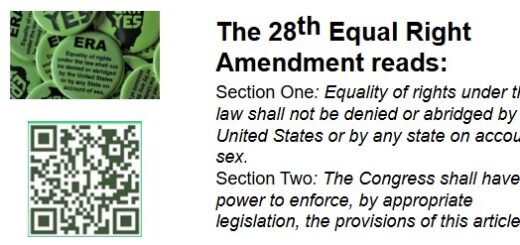
The Equal Rights Amendment (ERA) is an amendment to the United States Constitution that guarantees equality under the law, regardless of sex or gender. Originally introduced in 1923 and passed by Congress in 1972, the ERA met all constitutional requirements to become the 28th Amendment in 2020.67 In January 2025, in the final days of his presidency, former President Biden announced that the ERA is the “law of the land.”68 If universally recognized and implemented, the ERA would provide a critical tool for challenging laws and policies that reinforce sex-based discrimination. Laws that allow or enable child marriage, at both the state and federal levels, could be struck down as unconstitutional because such laws have a disproportionately negative impact on girls, preventing them from equally enjoying their rights and participating fully in society.69 Additionally, the ERA could open the door for federal legislation that sets a national minimum age of marriage to remedy the discriminatory nature of child marriage. As the United States faces increasing scrutiny for its failure to prohibit child marriage, the ERA could serve as a transformative legal foundation to protect women and girls’ rights and meet its commitments under international law.
Aiding Children Who have been Trapped
In states where child marriage is completely banned, girls under 18 can access a variety of confidential services through specialized organizations, runaway and homeless youth shelters, and legal aid groups. Because these states legally recognize minors as adults in marriage-related cases, girls attempting to leave a forced marriage are no longer subject to the same restrictions as runaways and are entitled to specific legal protections. States that have banned child marriage: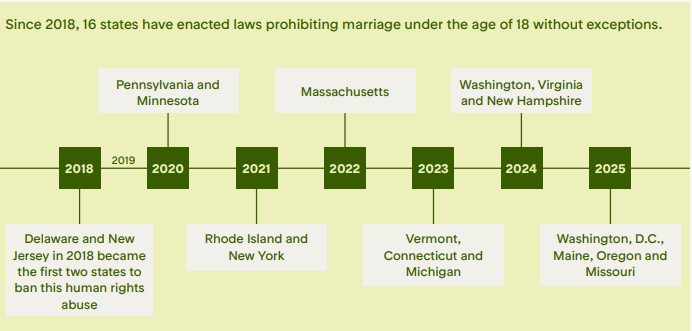
Specialized anti-forced marriage organizations
National and regional non-profits specialize in assisting girls escaping forced or child marriages.
- Unchained At Last: This organization provides free legal services, social services, and shelter to survivors of forced marriages. They have led the national movement to ban child marriage and can help minors navigate the specific protections offered in their state.
- Tahirih Justice Center: Through its Forced Marriage Initiative, Tahirih offers a confidential helpline, legal expertise, and case-by-case assistance. They can connect individuals with local resources and guide them through legal options like annulment or an order of protection.
Youth and runaway shelters
For immediate safety, youth shelters offer a confidential and secure place to stay, along with resources to help establish independence.
- National Runaway Safeline: This 24/7 hotline (1-800-RUNAWAY) can provide immediate crisis intervention and refer callers to local youth shelters and other resources.
- Safe Place: As a national outreach program, Safe Place designates businesses, libraries, and public buildings as safe havens. A minor can go to any Safe Place location to be connected with a local youth shelter and support services.
- Local Emergency Shelters: Local family and youth services often operate emergency shelters for minors. For instance, the Center for Human Development (CHD) offers temporary housing and counseling for youth aged 14 to 17 in Western Massachusetts.
Legal and court-based services
Laws banning child marriage grant minors a legal path to exit a forced marriage safely.
- Annulment or Divorce: While a marriage in a ban state is not legally valid, a girl may need an annulment or divorce to resolve any disputes over property, shared assets, or children born during the marriage. State or national legal aid services can provide a lawyer to help with these filings.
- Child Custody Orders: For minors who had a child during a forced marriage, the court can issue a custody order. This is a critical step for protecting the child’s safety and ensuring custody is not given to the abusive spouse.
- Orders of Protection: A girl facing abuse can obtain an order of protection from the court against her spouse or other family members. This order prohibits the abuser from contact, harassment, or threats.
How to seek help
Check specific resources in the state where the minor resides.
- Confidential Hotlines: Contacting a confidential hotline is the fastest way to get immediate support and referrals to local resources.
- Trusted Adult: A trusted adult, such as a teacher, school counselor, or other authority figure, can assist a minor in finding help.
- Online Resources: Many organizations have online forms and chats for confidential communication, which can be safer for a minor whose phone calls may be monitored.